·
Klinikon hyvinvointi
Perusterveydenhuolto
Terveydenhuollon IT / CIO
After-hours documentation and clinician sleep
How after-hours medical record work disrupts sleep, drives burnout, and affects patient safety—and what organisations can do about it
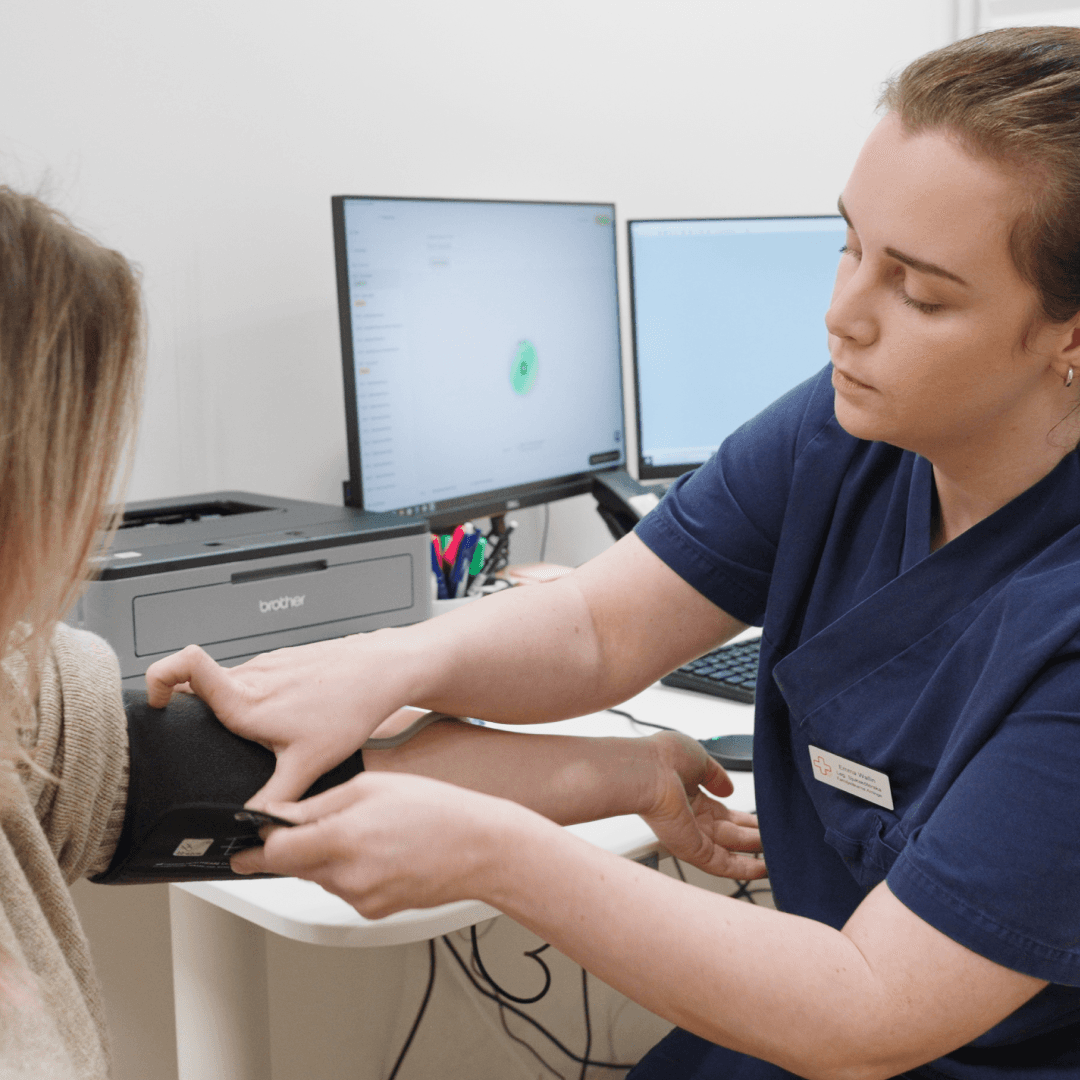
Clinical documentation doesn’t end when the consultation room door closes. Across primary and secondary care, a growing number of General Practitioners (GPs), hospital doctors, and nurses return home only to spend their evenings completing medical notes, discharge summaries, referrals, and patient letters. This pattern is so common it has acquired its own name in the medical literature: “pajama time.” What receives far less attention is what this habit does to sleep. The hours spent in front of a medical record system after dark disrupt the physiology of sleep onset, sustain the cognitive arousal of clinical decision-making long past the working day, and feed directly into the burnout and fatigue cycles that compromise both clinician health and patient safety.
How widespread is after-hours documentation among clinicians?
The scale of after-hours documentation is well documented, even if it remains structurally normalised. Data from the American Medical Association’s survey of more than 12,400 physicians across 81 health systems found that 20.9% of physicians spend more than 8 hours per week on medical record system tasks outside normal working hours, a figure unchanged from 2022 despite broader improvements in burnout rates. That stagnation matters: it signals that after-hours documentation has not responded to the same organisational interventions that have reduced other dimensions of burnout.
A 2025 Harris Poll cited by Veradigm found that clinicians spend approximately 28 hours per week on administrative duties overall, spanning both during and outside clinic hours. Within that broader burden, physicians average 1.77 hours per day on electronic documentation outside clinic hours. A study published in the Journal of Internal Medicine and cited by Tebra found that physicians average 1.2 hours of after-hours medical record system work on clinic days and 1.3 hours on weekends, figures that compound across a working week into a substantial erosion of personal recovery time.
In primary care specifically, the burden is particularly acute. Primary care physicians spend approximately 3 hours per day on clinical documentation alone, with a significant portion of that work falling outside scheduled hours. A cross-sectional survey of US family medicine residents found that nearly one-third of upper-year residents spend 3 or more hours per night on ambulatory medical record systems after hours, time that directly displaces sleep, rest, and recovery.
While much of this data originates in the United States, the structural conditions driving it, including high patient volumes, complex medical record systems, and consultation times that do not accommodate thorough note-taking, are equally present across European healthcare systems, including the National Health Service (NHS).
The physiology of screen-based work before sleep
The problem with completing medical record system entries, patient letters, and clinical codes late at night is not simply one of time. It is physiological. Screen-based work in the hours before sleep interferes with the body’s preparation for rest through at least two distinct mechanisms.
The first is blue light exposure. Screens emit short-wavelength blue light that suppresses melatonin production, the hormone that signals to the body that it is time to sleep. Even relatively brief exposure in the two hours before bed can delay sleep onset and reduce total sleep duration. For clinicians completing documentation at 10 or 11 pm, this is not a marginal effect.
The second mechanism is cognitive arousal. Clinical documentation is not passive data entry. It requires active recall of patient details, application of clinical codes, review of existing records, and ongoing clinical decision-making. These are high-order cognitive tasks that activate the prefrontal cortex and sustain alertness, the neurological opposite of the wind-down state required for sleep onset. The brain cannot easily transition from resolving a complex referral to achieving restorative sleep within a short interval.
Cognitive load and the “can’t switch off” effect
The concept of cognitive load, meaning the mental effort required to process and manage information, is central to understanding why after-hours documentation burden is so disruptive to sleep. A cross-sectional mixed-methods survey published in April 2026 examined burnout and cognitive load among primary care clinicians, finding that administrative burden and medical record system complexity were significant contributors to the mental effort clinicians carry, and that this load does not simply dissipate when the working day ends.
Structured clinical documentation requires clinicians to hold multiple threads simultaneously: the clinical narrative of the encounter, the appropriate terminology and coding, the accuracy of the record for medicolegal purposes, and the downstream implications for patient care. When clinicians perform this work late in the evening, those cognitive threads remain active. The result is a state sometimes described clinically as “hyperarousal,” a heightened alertness incompatible with sleep initiation.
This effect is compounded by the emotional content of clinical work. Notes about complex or distressing cases require clinicians to re-engage with the emotional weight of those encounters, triggering stress responses that further delay sleep. Unlike administrative tasks in other professions, clinical documentation is rarely emotionally neutral.
What the research says: documentation burden and sleep deprivation in healthcare
The peer-reviewed evidence linking documentation burden to reduced sleep quality and burnout is substantial and growing.
A systematic review and meta-analysis published in JMIR Medical Informatics in June 2024 confirmed medical record system use as a significant contributor to burnout among healthcare professionals across multiple settings and specialties. The review drew on data from PubMed, Embase, and Web of Science, providing robust methodological grounding for the documentation–burnout–wellbeing pathway.
The American Medical Association’s 2024 survey data places the overall physician burnout rate at 43.2%, with after-hours documentation consistently identified as a primary driver of work-life imbalance. Burnout, classified in the ICD-11 as an occupational phenomenon, is associated in the clinical literature with sleep problems, depression, anxiety, and in severe cases, suicidal ideation.
A systematic review published in the Journal of General Internal Medicine characterised documentation burden measurement across 135 studies, defining “pajama time” as medical record system activity between 5:00 PM and 7:00 AM and cataloguing how after-hours work is tracked across health systems. The consistency of this definition across the literature reflects how embedded the phenomenon has become.
A family medicine residency study published in Academic Medicine found that insufficient sleep was independently associated with lower professional satisfaction, lower medical knowledge scores, and higher rates of burnout. These associations held even after controlling for other variables, suggesting that after-hours documentation carries its own independent risk, separate from overall workload.
The burnout and sleep deprivation feedback loop
One of the most clinically significant aspects of after-hours documentation is that it does not simply cause poor sleep. It participates in a self-reinforcing cycle that makes both problems progressively worse.
After-hours documentation displaces sleep time and disrupts sleep quality. Sleep deprivation then impairs the cognitive functions most essential to efficient clinical documentation: working memory, processing speed, attention, and the ability to retrieve and organise information accurately. A clinician who is sleep-deprived takes longer to complete the same documentation tasks, which pushes more work into the following evening, further reducing sleep.
This feedback loop is well recognised in the burnout literature. Veradigm’s analysis notes that burnout causes sleep problems directly, while sleep problems in turn worsen the emotional exhaustion and depersonalisation that characterise burnout. The bidirectional relationship means that interventions targeting only one side of the loop are unlikely to be sufficient.
The cognitive performance consequences of this cycle extend beyond the individual clinician. Reduced working memory and attention increase the risk of documentation errors, missed clinical codes, and incomplete records, creating downstream risks for patient care.
How after-hours documentation affects patient safety
The connection between clinician sleep deprivation and patient safety is one of the most thoroughly evidenced relationships in healthcare research. Sleep-deprived clinicians demonstrate measurable impairments in diagnostic accuracy, clinical decision-making, procedural performance, and communication, all of which are directly relevant to patient outcomes.
When after-hours documentation is understood as a driver of sleep deprivation rather than simply a workload inconvenience, it becomes a patient safety issue. A clinician completing two hours of medical record system work after midnight and then returning to clinical practice the following morning is not functioning at full cognitive capacity. The errors that result, whether in diagnosis, prescribing, or communication, may not be traceable back to their source, but the causal pathway is well established in the literature.
Documentation quality itself also suffers under conditions of fatigue. Notes completed late at night, when cognitive resources are depleted, are more likely to be incomplete, inaccurate, or poorly structured, reducing their value as clinical records and increasing the risk of miscommunication between care teams.
Which clinicians are most affected?
After-hours documentation is not evenly distributed across the clinical workforce. Several groups carry a disproportionate share of the burden.
General Practitioners in primary care face some of the heaviest documentation loads relative to available time. High patient volumes, short consultation slots, and the breadth of conditions managed in primary care create conditions in which thorough note-taking during appointments is structurally difficult. A significant portion of documentation is therefore deferred to after hours.
Junior doctors in secondary care, particularly those in training grades, are consistently identified in the literature as high-risk groups. The family medicine residency data showing that nearly one-third of upper-year residents spend 3 or more hours nightly on after-hours medical record system work illustrates the scale of the problem at this career stage. Junior doctors often lack the workflow autonomy to address the problem independently.
Gastroenterology and other hospital specialties are also significantly affected. A study published in Digestive Disease Sciences in March 2026 measured medical record system burden among gastroenterology providers at a large tertiary referral centre, finding substantial after-hours documentation activity.
Mental health providers represent another group with specific documentation pressures. A retrospective observational study published in JMIR Formative Research in 2026 found that documentation burden contributes to burnout among mental health providers and reduces time available for direct patient care, a particularly acute tension in a specialty where therapeutic time is the primary intervention.
Gender and seniority disparities in documentation burden are less well characterised in the literature, though some evidence suggests that female clinicians and those in earlier career stages carry proportionally higher administrative loads relative to their clinical autonomy.
Organisational and systemic drivers behind the problem
After-hours documentation has not emerged from individual habits or poor time management. It is the predictable output of structural conditions that make completing documentation during working hours increasingly difficult.
Key systemic drivers include:
Consultation time constraints. In many primary care settings, appointment slots of 10 to 15 minutes do not realistically accommodate both a thorough clinical encounter and complete contemporaneous note-taking. Documentation is deferred by design.
Medical record system design. Many medical record systems are built around administrative and billing requirements rather than clinical workflow. Poorly designed legacy systems slow data entry, require multiple navigation steps for simple tasks, and generate documentation templates that prioritise completeness over usability.
Understaffing. When clinical teams are short-staffed, the documentation burden per clinician increases. There is less time during the working day to complete notes, and no administrative support to absorb lower-complexity tasks.
Normalisation of after-hours work. In many clinical cultures, completing documentation at home is treated as an expected part of professional practice rather than a systemic failure. This normalisation reduces the likelihood that organisations will treat it as a problem requiring structural intervention.
Increasing documentation requirements. Regulatory, medicolegal, and commissioning requirements have expanded the volume and complexity of clinical documentation over time, without commensurate increases in the time allocated to complete it.
How ambient voice technology and AI medical assistants are changing the picture
The most direct technological response to after-hours documentation is ambient voice technology and AI medical assistants, an approach that uses AI medical assistants to listen to clinical consultations in real time and generate structured clinical notes automatically, without requiring the clinician to type or dictate after the encounter.
A narrative review published in Cardiovascular Diagnosis and Therapy in February 2026 examined ambient AI scribes combining automated speech recognition, natural language processing, and generative AI, finding that these tools address documentation burden directly by capturing encounters and generating documentation in real time, removing the need for after-hours completion.
The evidence on wellbeing outcomes is emerging and encouraging. A quality improvement study published in JAMA Network Open in 2025, covering 263 physicians across six US health systems, found that after 30 days of using an ambient AI scribe, burnout dropped from 51.9% to 38.8%, with significant improvements in after-hours documentation time and cognitive load. This represents one of the most direct demonstrations that reducing documentation burden has measurable effects on clinician wellbeing.
A comparative study published in the Canadian Journal of Emergency Medicine in 2026 examined AI scribes versus human charting in emergency medicine, finding that ambient AI reduced documentation burden in high-volume settings where after-hours completion is particularly common.
For mental health providers specifically, AI-powered documentation tools have shown promise in reducing the administrative burden that drives burnout and displaces therapeutic time, addressing a documentation challenge that has historically been considered difficult to automate due to the sensitivity and complexity of clinical content.
The mechanism by which these tools affect sleep is straightforward: if documentation is completed during the consultation, there is less, or nothing, left to complete after hours. Shifting cognitive load from the evening to the working day removes the physiological and psychological disruption that after-hours screen work creates.
What healthcare organisations can do to reduce after-hours documentation
Reducing after-hours documentation requires action at the organisational and systemic level, not just individual behaviour change. Evidence-informed approaches include:
Adopting ambient voice technology and AI medical assistants that generate clinical notes during consultations, reducing the volume of documentation deferred to after hours. The evidence from the JAMA Network Open study suggests this is currently the most effective single intervention for reducing pajama time.
Redesigning consultation scheduling to build in time for contemporaneous note completion, accepting that a 12-minute appointment with 3 minutes of documentation time is more sustainable than a 15-minute appointment with documentation completed at midnight.
Reviewing medical record system design and configuration, working with vendors to reduce unnecessary clicks, simplify templates, and align system design with clinical workflow rather than administrative requirements.
Establishing documentation boundaries as part of wellbeing policy, making explicit that after-hours medical record system access is a metric to be monitored and reduced, not a sign of professional dedication.
Providing administrative support for tasks that do not require clinical expertise, reducing the proportion of a clinician’s documentation burden that requires their specific knowledge and training.
Measuring pajama time as a standard workforce wellbeing indicator, using the medical record system activity data that health systems already collect. The systematic review in the Journal of General Internal Medicine provides a methodological framework for doing this consistently.
Treating documentation burden as a sleep and safety issue
After-hours documentation is not a productivity problem with a productivity solution. It is a clinical safety and public health issue with measurable consequences for the sleep, health, and cognitive performance of the clinicians on whom healthcare systems depend. The evidence is consistent: high documentation burden outside working hours is associated with reduced sleep quality, increased burnout, impaired clinical performance, and downstream risks to patients.
The framing matters. When organisations treat pajama time as an individual time-management failure, they locate the solution in the wrong place. When they treat it as a structural outcome of how documentation systems, consultation schedules, and staffing levels are designed, the range of available interventions expands considerably. Ambient voice technology and AI medical assistants represent a significant part of that solution, but they work most effectively within organisations that have also addressed the scheduling, staffing, and cultural conditions that make after-hours documentation feel unavoidable.
Sustainable clinical care requires rested clinicians. That is a patient safety requirement, not a wellbeing aspiration. It starts with ensuring that the documentation day ends when the clinical day does.
Frequently asked questions
▶ What is “pajama time” and how common is it among clinicians?
“Pajama time” is the term used in medical literature for clinical documentation completed outside working hours, typically at home in the evenings or at weekends. Data from the American Medical Association’s survey of more than 12,400 physicians found that 20.9 per cent spend more than 8 hours per week on medical record system tasks outside normal working hours. Physicians average 1.77 hours per day on electronic documentation outside clinic hours, and nearly one-third of upper-year family medicine residents spend 3 or more hours nightly on after-hours medical record system work.
▶ How does after-hours documentation affect sleep?
Screen-based documentation before bed disrupts sleep through two mechanisms. First, screens emit blue light that suppresses melatonin, the hormone that signals it’s time to sleep, which can delay sleep onset even after relatively brief exposure. Second, clinical documentation requires active recall, coding decisions, and clinical decision-making, all of which sustain cognitive arousal and make it difficult for the brain to transition into the wind-down state needed for sleep.
▶ What does the research say about documentation burden and burnout?
A systematic review and meta-analysis published in JMIR Medical Informatics in June 2024 confirmed medical record system use as a significant contributor to burnout across multiple healthcare settings and specialties. The American Medical Association’s 2024 survey places the overall physician burnout rate at 43.2 per cent, with after-hours documentation consistently identified as a primary driver of work-life imbalance. A family medicine residency study published in Academic Medicine found that insufficient sleep was independently associated with lower professional satisfaction, lower medical knowledge scores, and higher burnout rates.
▶ Which clinicians carry the heaviest after-hours documentation burden?
General Practitioners in primary care face some of the heaviest loads, spending approximately 3 hours per day on clinical documentation alone, with a significant portion falling outside scheduled hours. Junior doctors in training grades are also consistently identified as high-risk, with nearly one-third of upper-year residents spending 3 or more hours nightly on after-hours medical record system work. Mental health providers and gastroenterology clinicians are also significantly affected, according to studies published in 2026.
▶ Does after-hours documentation create a feedback loop with burnout?
Yes. After-hours documentation displaces sleep time and disrupts sleep quality. Sleep deprivation then impairs the cognitive functions most essential to efficient documentation, including working memory, processing speed, and attention, meaning clinicians take longer to complete the same tasks. This pushes more work into the following evening, further reducing sleep. Veradigm’s analysis notes that burnout causes sleep problems directly, while sleep problems in turn worsen the emotional exhaustion that characterises burnout, making the relationship bidirectional.
▶ How does clinician sleep deprivation affect patient safety?
Sleep-deprived clinicians show measurable impairments in diagnostic accuracy, clinical decision-making, procedural performance, and communication. When after-hours documentation drives sleep deprivation, it becomes a patient safety issue rather than simply a workload inconvenience. Documentation quality also suffers under fatigue: notes completed late at night are more likely to be incomplete, inaccurate, or poorly structured, increasing the risk of miscommunication between care teams.
▶ What systemic factors drive after-hours documentation?
Several structural conditions make completing documentation during working hours difficult. Consultation slots of 10 to 15 minutes don’t realistically accommodate both a thorough clinical encounter and complete note-taking, so documentation is deferred by design. Many medical record systems are built around administrative and billing requirements rather than clinical workflow, slowing data entry. Understaffing increases the documentation burden per clinician, and the normalisation of after-hours work in clinical culture reduces pressure on organisations to treat it as a systemic problem.
▶ Can ambient voice technology reduce after-hours documentation?
The evidence is encouraging. Ambient voice technology uses AI medical assistants to listen to clinical consultations in real time and generate structured clinical notes automatically, removing the need for after-hours completion. A quality improvement study published in JAMA Network Open in 2025, covering 263 physicians across six US health systems, found that after 30 days of using an ambient AI scribe, burnout dropped from 51.9 per cent to 38.8 per cent, with significant improvements in after-hours documentation time and cognitive load.
▶ What can healthcare organisations do to reduce pajama time?
The article identifies several evidence-informed approaches. Adopting ambient voice technology and AI medical assistants to generate notes during consultations is currently the most effective single intervention, based on the JAMA Network Open study. Organisations can also redesign consultation scheduling to build in time for contemporaneous note completion, review medical record system design to reduce unnecessary steps, provide administrative support for tasks that don’t require clinical expertise, and measure after-hours medical record system activity as a standard workforce wellbeing indicator.