·
Documentation clinique
Soins primaires
Administration de la santé
TI de la santé / CIO
Propriétaire de cabinet privé
Building a Business Case for AI Documentation in European GP Practices
Learn how to construct a rigorous business case for AI-assisted documentation in European primary care, covering ROI, compliance, and stakeholder perspectives
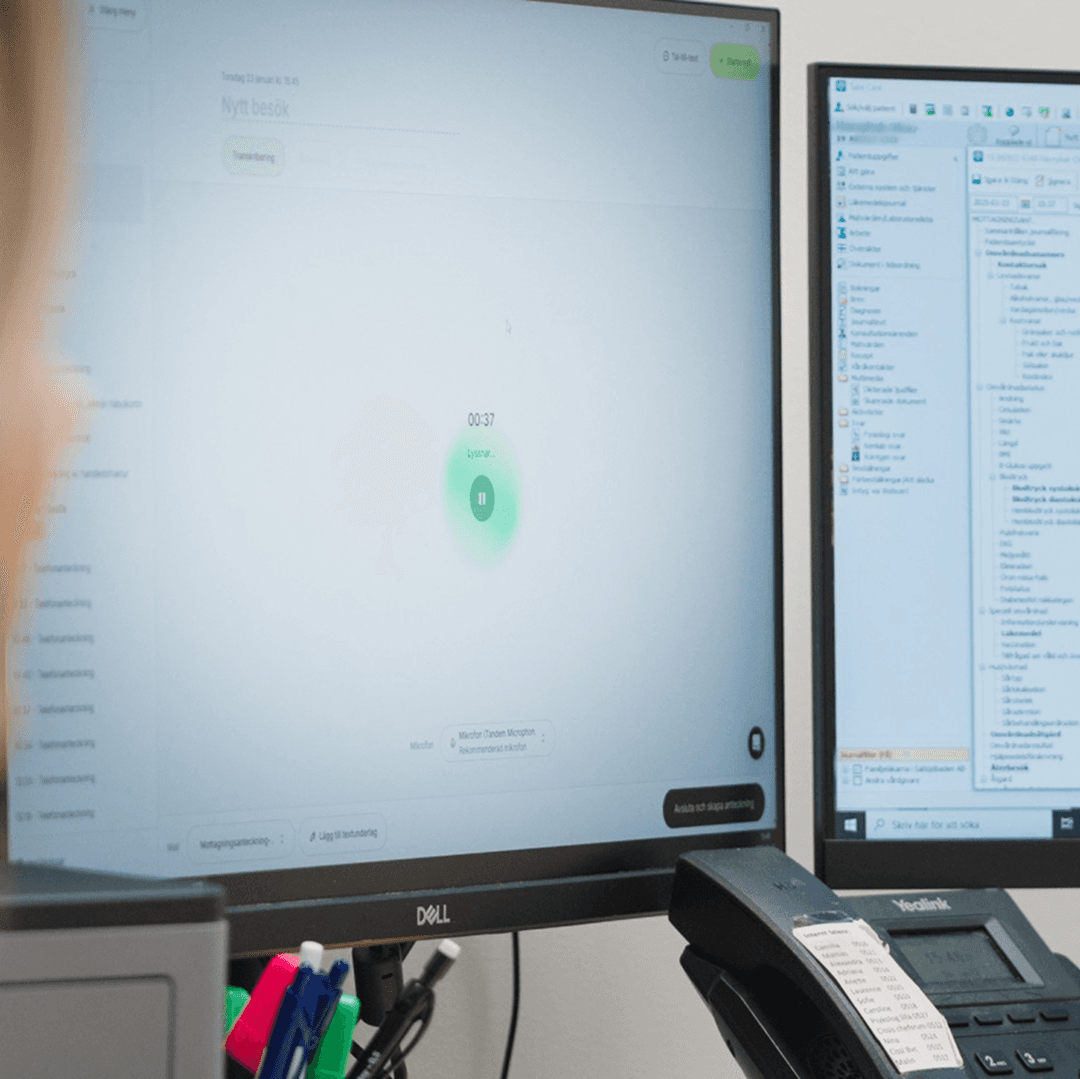
Building a business case for any new clinical technology is rarely straightforward, but AI-assisted documentation presents a particular challenge for European GP practices and clinics. The evidence base is maturing rapidly, regulatory requirements are distinct from those in the US, and the stakeholders who need convincing – clinical leads, practice managers, information governance officers, and GPs themselves – each evaluate the proposition through a different lens. What follows is a practical guide to constructing a rigorous, evidence-grounded internal business case that addresses all of those perspectives.
Why European GP practices are reconsidering documentation tools now
Several converging pressures have brought AI-assisted documentation into serious consideration across European primary care. The EU faces a shortage of 1.2 million doctors, nurses, and midwives, a figure confirmed in a 2025 European Parliament briefing, with demographic ageing and workforce attrition identified as primary drivers. At the same time, administrative burden is a leading cause of GP burnout across France, Germany, the Netherlands, Sweden, Switzerland, and the UK, with documentation requirements estimated to consume approximately three hours of a physician’s working day.
The regulatory landscape has also shifted materially. The EU AI Act entered into force in August 2024, the European Health Data Space regulation passed in 2025, and the European Commission has identified four categories of challenges to clinical AI deployment – technological, legal and regulatory, organisational, and social – all of which a sound business case must address. Meanwhile, the first large-scale European clinical evidence on AI scribes has begun to emerge, giving procurement teams access to data from comparable healthcare systems rather than relying solely on US-sourced literature.
What the business case actually needs to prove
A credible internal business case for AI-assisted documentation needs to answer four core questions for any decision-maker in a GP practice or clinic. First, let’s clarify what is an AI medical scribe and how it functions, then address these key questions:
Does it save measurable time? Decision-makers need quantified estimates of time saved per consultation, per clinician, and per week – not general claims about efficiency.
Does it reduce clinical risk? The case must address documentation quality, error rates, and whether AI-generated notes meet the same or higher standards as manually produced ones.
Is it compliant with EU law? GDPR, Medical Device Regulation classification, and data residency requirements are non-negotiable in any European procurement process.
Does it deliver a return on investment? The financial model must show that the cost of the tool is recovered through capacity gains, reduced overtime, or avoided costs – within a realistic timeframe.
Any business case document that can’t answer all four questions is unlikely to proceed through governance approval in a European clinical setting.
Quantifying the documentation burden in your practice
Before any ROI calculation is possible, a practice needs an accurate baseline of its current documentation load. This diagnostic step is foundational. Without it, projected savings are speculative rather than evidence-based.
The key metrics to capture are:
Average time per consultation spent on notes – this should include both in-consultation documentation and post-consultation completion time
Total weekly admin hours per clinician – distinguishing between structured note-writing, coding, referral letters, patient letters, and discharge summaries
Downstream indirect costs – appointment backlogs attributable to documentation delays, overtime hours linked to note completion, and any locum or agency costs used to cover capacity shortfalls
A 2026 physician survey across primary care clinics found persistent admin burden and fragmented workflows as defining characteristics of current clinic operations, reinforcing that self-reported time estimates alone are often insufficient. Structured workflow analysis yields more accurate data. Practices can conduct a time-in-motion study over two to four weeks, asking a representative sample of GPs to log documentation time per consultation using a simple spreadsheet. This produces the baseline figure against which any projected saving can be measured.
The real costs of admin burden: beyond time
The business case becomes significantly stronger when it moves beyond time-on-task to address the broader organisational costs of documentation burden. These aren’t quality-of-life complaints – they represent quantifiable business risks.
Clinician burnout and retention risk
A 2025 Lancet Regional Health Europe paper on workforce psychological distress and occupational outcomes identifies high workloads and organisational factors as primary contributors to burnout and turnover intention across European health systems. Recruiting a replacement GP carries substantial costs in advertising, onboarding, and temporary cover – costs that are rarely captured in standard financial reporting but that significantly affect the ROI of preventive interventions.
Reduced appointment capacity
When documentation overruns consume time that could otherwise support patient-facing activity, the effective appointment capacity of a practice falls. This has direct consequences for waiting lists and patient access.
Documentation errors and clinical risk
Rushed or incomplete notes create downstream risk: missed clinical codes, delayed referrals, and incomplete patient summaries. These carry both clinical and medico-legal implications that add weight to the risk register component of any business case.
Effect on patient experience
A GP who’s simultaneously typing notes and consulting is less able to maintain eye contact and engage attentively. Research on ambient AI documentation and cognitive load has noted that reducing documentation burden during the encounter supports more patient-centred consultations.
How AI-assisted documentation reduces these costs
Decision-makers evaluating this category of tool need to understand what they’re actually procuring. AI-assisted documentation in a GP consultation context typically works through three sequential steps:
Real-time transcription – ambient voice technology captures the spoken conversation between clinician and patient during the consultation
Structured note generation – the transcript is processed and a structured clinical note is generated, populated against the relevant template or medical record system field format
Clinician review and approval – the clinician reviews the draft note, edits as necessary, and approves it before it enters the patient record
A comparative study of AI scribes versus human documentation in simulated general practice consultations found that AI-generated notes were comparable in quality to human-generated notes. The first large-scale European clinical study on AI scribes, conducted with 1,295 clinicians across Swedish primary and secondary care settings, found a 29% reduction in documentation time, from 6.69 minutes to 4.71 minutes per note, across more than 375,000 clinical notes.
The mechanism behind this saving is that the clinician no longer switches between active listening and active typing. Separating the two tasks – talking first, reviewing second – reduces the dual-task penalty that drives both errors and post-consultation completion time.
Building the ROI model: a framework for European practices
A practical ROI model for a European GP practice doesn’t require financial modelling expertise. The core calculation runs as follows.
Step 1: Calculate time saved per day per clinician
If average documentation time per consultation falls from, say, 6.5 minutes to 4.5 minutes, that’s 2 minutes saved per consultation. For a GP conducting 25 consultations per day, that’s 50 minutes recovered daily.
Step 2: Convert time saved to capacity or cost
Fifty minutes per clinician per day, across five working days, is approximately four hours per week per GP. Across a practice of five GPs, that’s 20 hours per week. This can be expressed either as additional appointment capacity (at average consultation length) or as an equivalent reduction in overtime or locum hours.
Step 3: Compare against licensing costs
The annualised cost of the tool – typically a per-clinician subscription – is divided into the quantified weekly gain to derive a payback period. The exact figures will vary by practice size, specialty, and current documentation load, but working through the calculation with your own inputs gives a concrete timeline to break-even and a defensible number to bring to a budget conversation.
Step 4: Incorporate avoided costs
Where baseline data captures overtime costs, locum expenditure, or the administrative cost of managing appointment backlogs, include these in the model as avoided costs rather than direct savings. This strengthens the financial argument and reflects the total cost of documentation burden more accurately.
It’s worth noting that ambient clinical documentation generated $600 million in 2025, representing 2.4 times year-on-year growth – a scale of adoption that reflects documented efficiency gains across health systems globally, with thin margins and staff shortages identified as the primary drivers.
Compliance as a business case pillar: GDPR, MDR, and data residency
In European clinical settings, regulatory compliance isn’t a procurement footnote – it’s a central pillar of the business case. A tool that can’t demonstrate regulatory alignment won’t progress through governance approval regardless of its clinical performance.
EU data protection and health AI policy creates several specific requirements that procurement teams must address.
GDPR-aligned data processing agreements
Any AI documentation tool processes special category health data under Article 9 GDPR. The vendor must be able to provide a compliant Data Processing Agreement (DPA) that clearly specifies the lawful basis for processing, data subject rights, and processor obligations.
EU data residency
Patient consultation data must not be processed or stored outside the EU/EEA without specific legal mechanisms in place. Vendors should confirm explicitly where data is processed and stored, and whether any third-party sub-processors are located outside the EU.
Medical Device Regulation (MDR) classification
Where an AI documentation tool includes any form of clinical decision support or outputs that influence clinical decisions, it may require classification and registration as a medical device under EU MDR. Procurement teams should request written confirmation of MDR classification status from any vendor.
ISO 27001 certification
This internationally recognised information security management standard provides an auditable basis for assessing a vendor’s security posture. It’s increasingly expected as a baseline by NHS and European health system procurement teams.
A scoping review of security and privacy challenges in e-health technologies in primary care identifies decentralised and resource-limited settings as particularly vulnerable to data privacy risks – a finding directly relevant to GP practices that may lack dedicated information governance resource.
How to frame the case for different stakeholders
The same evidence base needs to be translated into different arguments depending on who’s in the room. Decision-making in a European GP practice or clinic typically involves at least four distinct audiences.
Clinical leads
Clinical leads are primarily concerned with whether the tool fits the consultation workflow and whether it supports or undermines clinical quality. The most effective arguments are evidence of documentation accuracy from peer-reviewed studies, examples from comparable European primary care settings, and confirmation that the clinician retains full editorial control over every note before it enters the patient record.
Practice managers
Practice managers focus on cost, efficiency, and operational impact. The ROI model, payback period, and reduction in overtime or locum costs are the primary arguments. Framing time saved as additional appointment capacity is often more persuasive than framing it as reduced stress.
IT and information governance leads
IT and information governance leads need to be satisfied on GDPR compliance, data residency, ISO 27001 certification, MDR classification, and medical record system integration. This audience requires written documentation from the vendor, not verbal assurances.
GPs
GPs are often the most sceptical audience, particularly regarding tools that might alter their established consultation style. Research on how AI automation of administrative tasks affects healthcare professionals’ work in Swedish primary care highlights the importance of addressing workflow disruption concerns directly and involving clinicians in pilot design rather than imposing adoption top-down. The most effective approach is peer evidence – data from GPs in comparable settings who’ve used the tool and report reduced cognitive load and post-consultation note completion.
What evidence to gather before making the case
A business case is only as strong as the evidence underpinning it. The following categories of evidence are the most persuasive for internal proposals in European clinical settings.
Peer-reviewed literature on documentation time savings – studies from comparable primary care contexts, prioritising European data where available. The Lancet Primary Care review of AI in primary care and the EGPRN keynote paper on AI for GPs provide high-authority reference points.
Published case studies from European primary care settings – the Swedish Capio study remains the most directly applicable large-scale European evidence currently available.
Vendor-supplied outcome data with independent validation – ask vendors for outcome data and check whether it has been independently reviewed or published in peer-reviewed form.
Internal baseline data – collected through the time-in-motion study described in the quantification section above.
Pilot data – even a small internal trial across three to five clinicians over four to eight weeks generates locally relevant evidence that’s typically more persuasive with clinical and managerial audiences than external benchmarks.
Evidence from multilingual settings is increasingly available. A prospective evaluation of a bilingual Arabic-English ambient AI scribe demonstrated reduced documentation burden in a real-world implementation – relevant to European practices operating in multilingual contexts.
Running a pilot: how to structure a low-risk internal trial
A structured pilot converts the business case from a theoretical projection into a locally evidenced proposal. The following design principles minimise risk while maximising the quality of evidence produced.
Select a representative cohort
Three to five GPs with a range of consultation complexity, digital confidence levels, and patient demographics produces more generalisable findings than a group of early adopters. Including at least one clinician who’s sceptical of the tool strengthens the credibility of positive results.
Define success metrics upfront
Establish the primary metrics before the pilot begins, so that results can’t be attributed to post-hoc selection. Recommended metrics include:
Average time per note (baseline versus pilot)
Post-consultation note completion rate and time-to-completion
Clinician-reported cognitive load (using a validated instrument such as the NASA Task Load Index)
Clinician satisfaction with note quality
Any documentation errors or required corrections
Set a clear timeline
Four to eight weeks is sufficient to capture workflow adjustment effects and generate meaningful data. The first two weeks typically involve a learning curve; weeks three to eight reflect steady-state performance.
Document outcomes in a business case-compatible format
Record results in a structured format that maps directly to the ROI model and the compliance assessment, so that pilot findings feed directly into the formal business case without requiring additional analysis.
Common objections and how to address them
Several objections recur consistently in European clinical procurement discussions around AI documentation tools.
“The AI might make clinical errors in the notes.”
Comparative evidence from simulated GP consultations shows AI-generated notes are comparable in quality to human-generated documentation. It’s also worth noting that the current standard – a clinician typing while simultaneously consulting – carries its own error risk. AI-assisted documentation with mandatory clinician review adds an explicit quality gate that doesn’t exist in all manual workflows.
“GPs won’t adopt it.”
Adoption concerns are best addressed through co-design rather than top-down implementation. Evidence from the Swedish longitudinal implementation study underlines the importance of involving healthcare professionals in the design of AI-based administrative automation from the outset. Piloting with volunteers, sharing results transparently, and allowing opt-in adoption reduces resistance.
“We’re not sure about data security.”
This concern has a straightforward response pathway: request the vendor’s DPA, ISO 27001 certificate, data residency confirmation, and MDR classification status in writing. If the vendor can’t supply these, the concern is substantiated and the tool should not proceed to procurement.
“It won’t integrate with our medical record system.”
Medical record system integration varies by vendor and system. Specific questions to ask include: Does the tool integrate natively with the practice’s medical record system, or does it require copy-paste? Does it support the coding standards used in the national system (e.g., SNOMED CT, ICD-10/11, Read codes)? What is the integration implementation timeline and cost?
What a strong business case document should include
A complete internal business case for AI-assisted documentation in a European GP practice or clinic should contain the following components.
Executive summary – a one-page overview of the problem, proposed solution, key financials, and recommended decision
Current state analysis – baseline documentation time data, clinician hours lost to admin, and any available data on burnout indicators or turnover
Proposed solution overview – a clear, non-promotional description of how the tool works, what it does and doesn’t do, and which clinical workflows it affects
Compliance assessment – written confirmation of GDPR alignment, data residency, MDR classification, and ISO 27001 status, with copies of relevant certificates
ROI model – the full financial calculation with stated assumptions, sensitivity analysis for lower-than-expected adoption, and projected payback period
Pilot findings – structured results from the internal trial mapped against pre-defined success metrics
Implementation plan – a phased rollout plan with training requirements, medical record system integration steps, and a timeline
Risk register – identified risks (adoption failure, integration issues, data security incidents) with mitigations and ownership assigned
How to choose the right AI documentation vendor for a European practice
Vendor selection in a European primary care context requires criteria that go beyond clinical accuracy claims. The following evaluation framework is specific to GP and clinic settings in the EU and EEA.
Clinical accuracy benchmarks
Ask for published or independently validated accuracy data, not marketing materials. Specifically request word error rates for speech-to-text, and data on clinical note completeness and precision in primary care consultations.
Language and accent support
European practices frequently involve clinicians and patients whose first language isn’t English. Evidence on multilingual AI scribe performance is emerging, but buyers should request specific evidence of performance in the languages and dialects relevant to their setting.
Medical record system compatibility
Confirm exact integration depth with the specific medical record system in use – not generic claims of compatibility. Request a technical integration specification document.
EU-specific certifications
As a minimum, vendors should hold ISO 27001 certification, be able to provide a GDPR-compliant DPA, and confirm EU data residency. MDR classification status must be confirmed in writing.
Support model and contract flexibility
European clinical settings require clear escalation paths for technical issues during clinical hours. Short initial contract terms (six to twelve months) with renewal options allow practices to exit if adoption or performance targets aren’t met.
References from comparable European settings
Ask for references from GP practices or primary care organisations in the EU or EEA, not only US-based health systems. The clinical, regulatory, and workflow context differs significantly across these settings, and reference cases from comparable environments carry more evidential weight.
The EGPRN research network’s analysis of AI for European GPs notes that AI tools tailored to GP needs within European health systems – including fragmented care settings and high-demand primary care contexts – are likely to deliver meaningfully different outcomes than tools designed primarily for US hospital environments. Vendor selection should reflect that distinction.
Frequently asked questions
▶ What does a business case for AI-assisted documentation need to prove?
A credible business case needs to answer four questions: does the tool save measurable time per consultation and per clinician, does it reduce clinical risk through better documentation quality, does it comply with EU law including General Data Protection Regulation, Medical Device Regulation, and data residency requirements, and does it deliver a return on investment within a realistic timeframe? Any proposal that can’t address all four is unlikely to pass governance approval in a European clinical setting.
▶ How does AI-assisted documentation actually work in a GP consultation?
The process runs in three steps. First, ambient voice technology captures the spoken conversation between the clinician and patient in real time. Second, the transcript is processed and a structured clinical note is generated against the relevant template or medical record system format. Third, the clinician reviews the draft note, edits where necessary, and approves it before it enters the patient record. The clinician retains full editorial control at every stage.
▶ What time savings does the evidence show for AI documentation tools in European primary care?
The first large-scale European clinical study on AI scribes, conducted with 1,295 clinicians across Swedish primary and secondary care settings, found a 29 per cent reduction in documentation time, from 6.69 minutes to 4.71 minutes per note, across more than 375,000 clinical notes. For a GP seeing 25 patients per day, a saving of two minutes per consultation recovers approximately 50 minutes daily.
▶ How do you build an ROI model for a GP practice considering this technology?
Start by calculating time saved per consultation, then multiply by daily consultation volume to get daily minutes recovered per clinician. Convert that figure to weekly hours across the full clinical team. Compare the annualised licensing cost against the equivalent value of that recovered time, expressed either as additional appointment capacity or as reduced overtime and locum expenditure. Where baseline data captures existing overtime or agency costs, include these as avoided costs to reflect the full financial impact of documentation burden.
▶ What are the EU regulatory requirements a vendor must meet before procurement?
Vendors must provide a General Data Protection Regulation-compliant Data Processing Agreement covering special category health data under Article 9. They must confirm that patient data is processed and stored within the EU or European Economic Area. Where the tool includes any form of clinical decision support, it may require classification as a medical device under EU Medical Device Regulation, and vendors must confirm their classification status in writing. ISO 27001 certification is increasingly expected as a baseline security standard by European health system procurement teams.
▶ Are AI-generated clinical notes as accurate as manually written ones?
A comparative study of AI scribes versus human documentation in simulated general practice consultations found that AI-generated notes were comparable in quality to human-generated notes. The article also notes that the current standard, a clinician typing while simultaneously consulting, carries its own error risk. AI-assisted documentation with mandatory clinician review adds an explicit quality check that doesn’t exist in all manual workflows.
▶ How should a GP practice structure a pilot before committing to full adoption?
A pilot of three to five GPs over four to eight weeks produces locally relevant evidence without significant organisational risk. The cohort should include a range of consultation complexity, digital confidence levels, and at least one sceptical clinician. Define success metrics before the pilot begins, including average time per note, post-consultation completion rate, clinician-reported cognitive load, and documentation error rates. The first two weeks typically reflect a learning curve; weeks three to eight represent steady-state performance.
▶ Why does documentation burden matter beyond the time it takes?
A 2025 Lancet Regional Health Europe paper identifies high workloads and organisational factors as primary contributors to burnout and turnover intention across European health systems. Replacing a GP carries substantial costs in advertising, onboarding, and temporary cover. Rushed or incomplete notes also create downstream clinical risk through missed clinical codes, delayed referrals, and incomplete patient summaries. Research on ambient AI documentation has noted that reducing documentation burden during the consultation supports more patient-centred care.
▶ How should the business case be framed for different stakeholders in a GP practice?
Clinical leads respond most to peer-reviewed evidence on documentation accuracy and confirmation that clinicians retain full editorial control. Practice managers focus on the return on investment model, payback period, and capacity gains expressed as additional appointments. IT and information governance leads need written documentation on General Data Protection Regulation compliance, data residency, ISO 27001 certification, and Medical Device Regulation classification. GPs, who are often the most sceptical audience, are best persuaded by evidence from peers in comparable settings and by being involved in pilot design rather than having adoption imposed.
▶ What should you look for when choosing an AI documentation vendor for a European practice?
Ask for published or independently validated clinical accuracy data, not marketing materials. Confirm exact integration depth with the specific medical record system in use. Request written confirmation of ISO 27001 certification, a General Data Protection Regulation-compliant Data Processing Agreement, EU data residency, and Medical Device Regulation classification status. Ask for references from GP practices or primary care organisations in the EU or European Economic Area specifically, since the clinical, regulatory, and workflow context differs significantly from US health systems. Favour short initial contract terms of six to twelve months with renewal options.