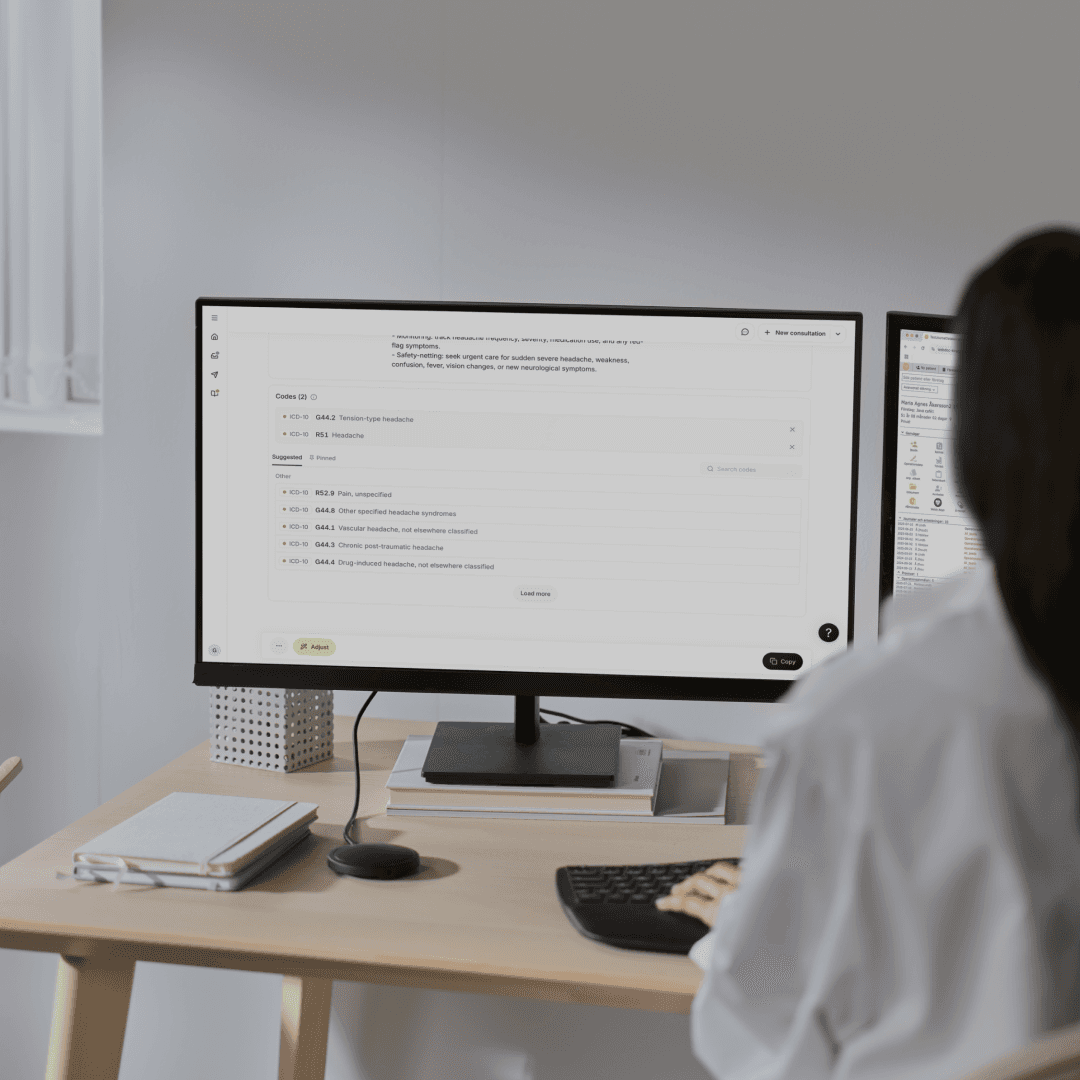
Recoletas brought AI-assisted clinical documentation to over 50 hospitals and clinics

How one of Spain’s largest private providers scaled Tandem's AI assistant to reclaim clinician time and preserve patient focus
Medical record system:
Proprietary system
Type:
Primary care and hospitals
Number of clinicians:
4,000+
1,000+ hours
total time saved
Reduced cognitive load
and increased focus on patient interactions
About Recoletas
Recoletas is one of Spain’s largest private healthcare groups, delivering more than 2 million consultations each year across over 50 hospitals and outpatient clinics. Headquartered in Valladolid, the organization operates across a broad range of specialties and care settings, serving patients nationwide.
The group supports a workforce of approximately 4,000 staff and provides care to more than 9,000 patients every day across its centers. At this scale, Recoletas evaluates new technology through a practical lens, prioritizing solutions that can be implemented reliably, earn clinician trust, and deliver clear benefits to both care teams and patients.
The problem: Clinical documentation had become increasingly complex and time-consuming
Documentation demands were growing across the network, particularly in specialties managing complex patient presentations. Clinicians were required to produce long, detailed medical records while simultaneously listening, reasoning, and engaging with patients during the visit.
One of Recoletas’ physicians highlighted the challenge clearly:
“I work in a specialty where medical records are complex and long. Patients come in with multiple symptoms that need to be connected and interpreted together.”
This level of complexity increased cognitive load during consultations and often pushed documentation work into evenings and after-hours time.
Leadership recognized that documentation burden was not only an efficiency issue, but also a risk to clinician focus, professional satisfaction, and patient interaction.
The solution: Recoletas deployed Tandem’s AI assistant in routine care
Recoletas partnered with Tandem Health to introduce its AI medical assistant across their 50 hospitals and clinics. Early evaluations focused on usability, speed of deployment, and clinical safety rather than experimental innovation.
From the outset, clinicians saw Tandem as a practical tool. One of the early users stated:
“This lets me focus on the patient instead of the computer. It’s that simple.”
Tandem’s assistant listened during consultations and generated structured clinical documentation in real time. Draft notes were available for clinician review before the visit concluded, allowing physicians to remain present with patients while retaining full control over final documentation. No audio was stored, and the system was designed to meet GDPR and Spanish data-protection requirements.
The results: Time recovered, documentation quality strengthened, and patient focus preserved
Early use of Tandem demonstrated clear operational and experiential benefits for clinicians across the Recoletas network. By reducing the need for manual typing and post-visit documentation, the assistant helped shift clinician attention back to the patient during consultations.
Clinicians consistently reported:
Greater focus on patient interaction during the visit
Less documentation completed after hours or between appointments
Reduced cognitive load from navigating screens and structured forms
Across early deployments, Recoletas clinicians have already saved more than 1,000 hours of administrative time using Tandem, reinforcing the value of documentation efficiency at scale.
For individual clinicians, the perceived quality of documentation was a decisive factor in adoption. One physician described the initial experience clearly:
“I am very demanding when it comes to clinical documentation. The first time I completed a note using Tandem, when the report was generated, I was honestly amazed.”
At the leadership level, the results supported a broader commitment to scale. Managing Director Roldán Rodríguez emphasized the alignment between clinical needs and organizational strategy:
“We evaluated other solutions, but Tandem’s value proposition and track record stood out. We want to continue leading innovation in a sector that increasingly demands digitalization, and this partnership with Tandem Health supports that mission.”
Implementation insights emphasized security, trust, and clinician autonomy
Trust in data handling was central to adoption. Clinicians expressed clear expectations around confidentiality and transparency in how medical information was processed.
As one physician explained, “I strongly believe in complete confidentiality of patient medical information. In healthcare, that is not optional, it is mandatory.” Understanding how data was anonymized and secured played a significant role in building confidence in the technology.
Recoletas’ implementation approach focused on minimal disruption. Tandem was positioned as a background assistant rather than a workflow change, preserving clinician autonomy and reducing resistance to adoption.
Key implementation factors included:
Piloting in real clinical settings before scaling
Emphasizing privacy-by-design and no audio storage
Allowing clinicians to maintain autonomy over final documentation
Integrating directly into existing health-information systems
The future outlook focuses on scaling human-first digital care
With deployment expanding across its national network, Recoletas sees AI-supported documentation as a foundation for more sustainable clinical practice. The organization plans to continue scaling Tandem’s assistant while exploring additional AI-based solutions that support clinicians without disrupting care delivery.
For Recoletas, the priority remains consistent: Technology needed to be unobtrusive, give time back to clinicians, and protect the core of medical practice: meaningful, focused interaction between doctors and patients.