20
min read
How AI is reshaping diagnostic accuracy in clinical settings
Explore how AI supports pattern recognition, reduces cognitive load, and improves diagnostic accuracy across radiology, pathology, primary care and specialist settings
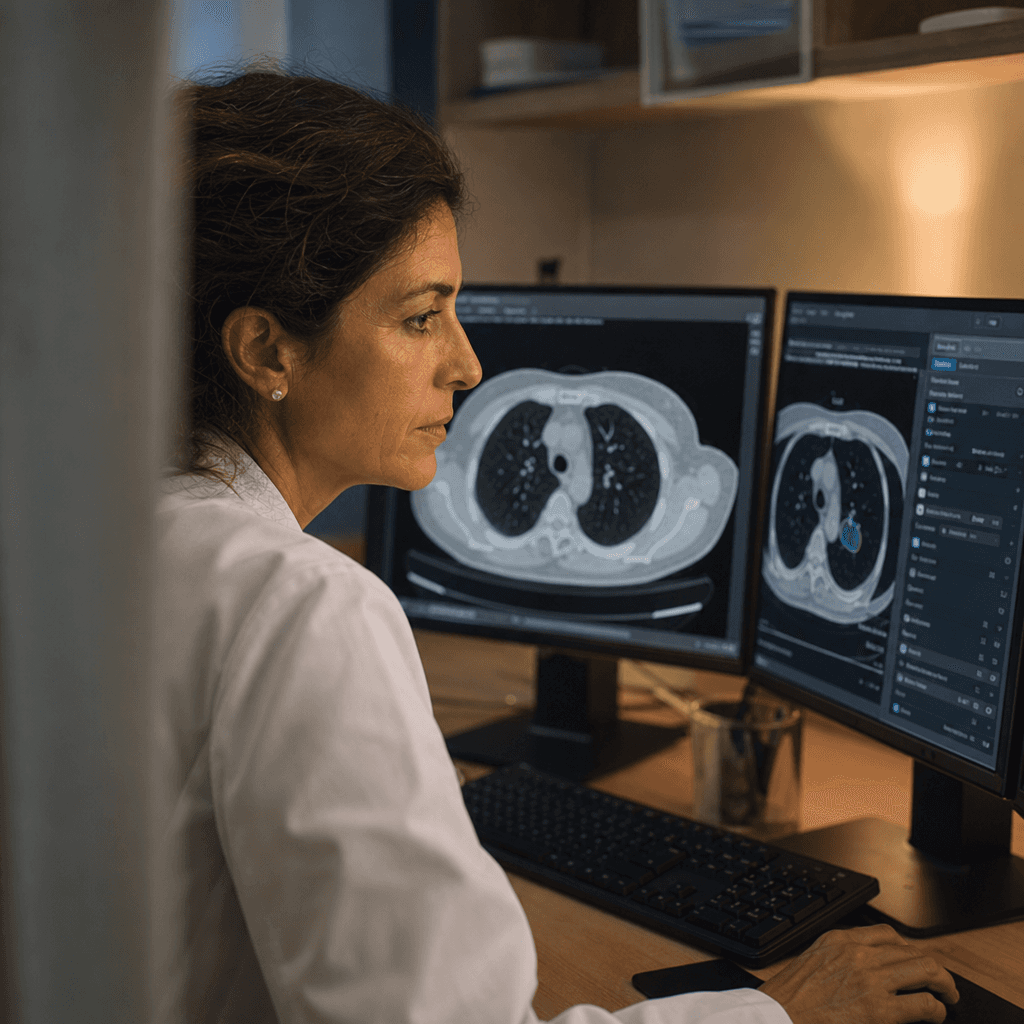
Diagnostic error remains one of the most persistent and consequential problems in modern healthcare. Studies consistently estimate that misdiagnosis contributes to a substantial proportion of preventable patient harm. In the European Union alone, adverse events affect an estimated 8 to 12 per cent of hospitalised patients, with diagnostic failures among the leading causes. Artificial intelligence (AI) is increasingly being positioned not as a replacement for clinical judgement, but as a structural solution to the conditions that make diagnostic error likely: time pressure, information overload, cognitive fatigue, and the sheer volume of data that clinicians are expected to synthesise during a single encounter. Understanding what AI can and cannot do in this space is now a practical concern for clinicians across every specialty.
What 'diagnostic accuracy' actually means in clinical practice
Diagnostic accuracy is, in its simplest form, the ability to correctly identify a condition at the right time for the right patient. In research contexts, it is measured through metrics such as sensitivity, specificity, positive predictive value, and area under the receiver operating characteristic curve. In clinical practice, it is experienced as something more complex: the product of history-taking, pattern recognition, differential reasoning, and iterative refinement across multiple encounters.
Achieving consistent diagnostic accuracy is structurally difficult. A general practitioner (GP) in a high-volume primary care setting may see 30 to 40 patients in a single day, each presenting with a different constellation of symptoms across an enormous breadth of potential conditions. A hospital physician conducting a ward round is simultaneously managing incomplete handover notes, interrupted workflows, and real-time changes in patient status. Even highly experienced clinicians operate under conditions that make errors more likely than the training environment would suggest.
Key factors that undermine consistent diagnostic accuracy include:
Cognitive load (the mental effort required to process multiple concurrent data streams) reduces the capacity for careful differential reasoning
Time pressure compresses consultation times and limits the depth of history-taking and physical examination
Incomplete patient histories arise when fragmented records across different medical record systems mean clinicians frequently lack the full clinical picture
Clinician variability in interpreting the same imaging or laboratory data is well documented across specialties
Where human diagnostics most commonly break down
Errors in the diagnostic process tend to cluster around specific cognitive failure modes. The most widely studied is premature closure, the tendency to settle on a diagnosis once an initial explanation fits, without adequately considering alternatives. A clinician who identifies a plausible cause for chest pain early in a consultation may unconsciously stop searching for evidence that would point to a different diagnosis.
Anchoring bias operates similarly. Once an initial hypothesis is formed, subsequent information tends to be interpreted in a way that confirms rather than challenges it. In high-volume settings such as busy emergency departments, morning GP surgeries, or complex ward rounds, these biases are amplified by the cognitive demands of managing multiple patients simultaneously.
Information overload is a related and increasingly recognised problem. As medical record systems accumulate more data, including lab trends, medication histories, previous imaging reports, and outpatient letters, the volume of potentially relevant information can paradoxically reduce diagnostic quality. Clinicians may focus on the most recent or most accessible data rather than the most diagnostically relevant.
A 2025 narrative review of 51 studies published in a Wolters Kluwer Health journal identified workforce shortages and subjective interpretation variability as compounding factors, particularly in radiology and pathology, where the same tissue sample or imaging study may be interpreted differently by different specialists.
How AI supports pattern recognition at scale
The core diagnostic value of AI lies in its capacity to process large volumes of structured and unstructured clinical data, including imaging, laboratory results, genomic data, and clinical notes, and surface patterns that may not be immediately visible to a clinician working under time pressure.
This capability operates at two distinct levels. The first is anomaly detection: AI systems trained on large datasets can flag deviations from expected patterns, such as an abnormal finding on a chest radiograph or an unexpected trend in serial blood results, and alert the clinician to investigate further. The second, more sophisticated level is differential diagnosis support, where AI systems not only flag an anomaly but suggest a ranked list of possible conditions consistent with the available data.
A comprehensive PRISMA-compliant review of 171 studies published in MDPI Applied Sciences cites a separate meta-analysis finding that human–AI collaboration reduced radiology reading times by approximately 27 per cent while maintaining a sensitivity around 1.12 times that of humans alone. This figure captures the augmentation model that most clinical AI researchers now advocate: AI improving the speed and consistency of pattern recognition, with the clinician retaining interpretive authority.
A European Journal of Medical Research review published in May 2025 highlighted AI's particular strength in analysing combinations of genetic information, medical imaging, and clinical records simultaneously, an integrative capacity that exceeds what any single clinician can reliably perform in real time.
AI in medical imaging: radiology, pathology, and dermatology
Medical imaging represents the most mature and evidence-rich domain for AI-assisted diagnostics. AI systems applied to radiology, pathology, and dermatology have accumulated the largest bodies of peer-reviewed evidence, and several tools in these specialties have received regulatory approval in the European market.
In radiology, deep learning models have demonstrated strong performance in detecting pulmonary nodules, intracranial bleeds, fractures, and early-stage malignancies. A study published in Archives of Medical Science examined deep learning applications in distinguishing benign from malignant pulmonary nodules on CT scans, a task where diagnostic accuracy directly affects lung cancer outcomes. The five-year survival rate for localised non-small cell lung cancer is approximately 65–68 per cent, falling to approximately 7 to 9 per cent for distant disease, making early and accurate nodule characterisation clinically significant.
In breast cancer, a Cureus review from April 2024 found that AI has shown significant potential in improving diagnostic accuracy and early detection, particularly in mammographic screening where reader variability between radiologists has historically been a documented limitation.
In pathology, AI systems trained to analyse digitised tissue samples are beginning to reduce the subjectivity of histological interpretation. The 2025 narrative review found that in highly specific, task-defined research settings with optimised conditions, AI improved accuracy and reduced diagnostic time by approximately 90 per cent or more in radiology and pathology. However, these figures do not represent performance in routine clinical deployment, where improvements are typically more modest.
In dermatology, AI classifiers trained on large image datasets have demonstrated performance comparable to, and in some studies exceeding, that of dermatologists in classifying common skin conditions. A mini-review of generative AI in clinical settings identified dermatology as one of the domains where automation of expert-intensive tasks is most advanced, alongside radiology reporting.
Real-world deployments in Europe are beginning to reflect this maturity. A Euronews Health report from December 2025 noted that AI has been applied to prostate cancer diagnosis to reduce waiting times, and that AI-powered cardiac auscultation tools are now capable of detecting heart conditions within 15 seconds. The same report noted that doctors still outperform AI in emergency settings requiring rapid, contextualised judgement.
AI-assisted diagnostics in primary care and general practice
Primary care presents a fundamentally different diagnostic challenge from specialist settings. GPs are expected to assess an enormous breadth of presentations, from acute infections to early signs of malignancy to complex multimorbidity, within consultation windows that in many European healthcare systems average under 15 minutes.
AI tools designed for primary care are therefore not primarily imaging classifiers. They tend to focus on clinical decision support integrated into the consultation workflow: surfacing relevant guidelines, flagging risk scores based on patient history, or identifying patterns across longitudinal records that might indicate an emerging condition.
One indirect but clinically important mechanism is the reduction of documentation burden. When AI medical assistants handle clinical notes in real time, capturing the content of a consultation through ambient voice technology (AVT) rather than requiring the clinician to type or dictate after the fact, the cognitive capacity freed up can be redirected toward diagnostic reasoning. A clinician who is not simultaneously managing a keyboard and a patient conversation is better positioned to listen, probe, and think.
Medical record system-integrated clinical decision support is increasingly being explored as a way to provide more context-specific diagnostic prompts than generic guideline alerts, though robust European-specific evidence for primary care deployment at scale is still limited.
A lightweight deep learning screening model described in a Medicine (Baltimore) diagnostic accuracy study demonstrated how AI can assist primary care institutions in screening for blinding eye diseases using a model trained on 89,158 images, the kind of specialist-level pattern recognition that GPs would not ordinarily be expected to perform unaided.
The role of clinical documentation quality in diagnostic outcomes
An often-overlooked link in the diagnostic chain is the quality of the clinical record itself. The information available to support a diagnostic decision, whether made by a clinician reviewing a referral, a specialist interpreting a discharge summary, or an AI system processing structured data, is only as reliable as the documentation that precedes it.
Rushed, templated, or contextually thin clinical notes degrade the diagnostic process in several ways. Critical symptom details may be omitted. The reasoning behind previous clinical decisions may not be recorded. Relevant social or occupational history that would contextualise a presentation may never make it into the record. When these gaps exist, they propagate downstream: the specialist who receives an incomplete referral, or the AI system trained to extract diagnostic signals from clinical notes, is working with impoverished data.
The European Journal of Medical Research review identified data quality as one of the persistent barriers to effective AI-assisted diagnostics, noting that AI systems are only as reliable as the clinical records they are trained and deployed on. Poor documentation is not merely an administrative inconvenience; it is a patient safety issue with direct diagnostic consequences.
How ambient voice technology improves the data AI works with
Ambient voice technology and real-time transcription tools address the documentation quality problem at its source. They capture the full content of a clinical consultation as it occurs, rather than relying on a clinician's post-hoc reconstruction of what was said and observed.
When a consultation is transcribed in real time and structured into a clinical note automatically, several things change. The note is more complete, because nothing is filtered through the fatigue or time pressure of post-consultation documentation. The language is more natural, because it reflects what was actually said rather than what the clinician had time to record. The contextual richness, including the patient's own description of their symptoms, the clinician's verbal reasoning, and the questions asked and answered, is preserved in a form that supports both human review and AI analysis.
Better input data directly improves the reliability of AI-assisted diagnostic suggestions. A clinical decision support system drawing on a comprehensive, accurately transcribed consultation note is working with fundamentally better material than one processing a brief, templated entry written under time pressure.
The MDPI Applied Sciences review emphasised that multimodal foundation models, those capable of integrating imaging, physiological monitoring, and medical record data, depend on the quality and completeness of the underlying records. AVT represents a practical mechanism for improving that quality at the point of care.
Clinical decision support: where AI moves from documentation to diagnosis
Clinical decision support (CDS) is the layer of AI functionality that moves beyond documentation and into active diagnostic assistance. Where an ambient scribe captures and structures what happened in a consultation, a CDS system analyses that information and prompts the clinician to consider something they might not have reached independently.
In practice, CDS tools may:
Surface differential diagnoses ranked by probability given the available clinical data
Flag potential drug interactions before a prescription is issued
Highlight risk scores, such as sepsis indicators or cardiovascular risk stratification, based on real-time data
Alert clinicians to guideline-recommended investigations that have not yet been ordered
Identify patients who may be deteriorating based on trends in physiological observations
The distinction between ambient scribing and CDS is increasingly blurred in modern AI platforms, which combine both functions. A tool that transcribes a consultation in real time and then generates a structured note may also, in the same workflow, flag a symptom cluster that warrants further investigation.
The JMIR two-wave survey study found sustained optimism among researchers about AI's potential in diagnostic medicine, but identified misalignment with clinical practice context as a key barrier. This suggests that CDS tools are most effective when integrated into existing workflows rather than requiring clinicians to adopt separate systems.
Regulatory and safety considerations for AI diagnostic tools in Europe
In the European Union, AI tools used in diagnostic contexts are subject to regulation under the Medical Device Regulation (MDR, EU 2017/745), which began applying from May 2021, with transition deadlines for legacy devices extended to December 2027 (Class III and implantable Class IIb) or December 2028 (other Class IIb, IIa, and certain Class I devices) under Regulation (EU) 2023/607, and applies to software that performs diagnostic functions. AI systems that influence clinical decision-making, including those that suggest diagnoses, flag risk scores, or interpret imaging, are generally classified as medical devices and must achieve CE marking before deployment in clinical settings.
The classification of an AI diagnostic tool under MDR depends on its intended purpose and the risk it poses to patients. Software that provides information to support clinical decisions is typically classified as Class IIa or IIb, requiring conformity assessment by a notified body. The regulatory pathway is demanding: manufacturers must demonstrate clinical performance, analytical validity, and post-market surveillance capability.
The General Data Protection Regulation (GDPR) adds a further layer of obligation. Patient data used to train, validate, or operate AI diagnostic systems must be processed lawfully, with appropriate data minimisation, purpose limitation, and, where relevant, explicit consent or a legitimate legal basis. Data residency requirements mean that for many European healthcare organisations, processing patient data outside the EU is not permissible without specific safeguards.
Developers and healthcare institutions are increasingly working to mitigate algorithmic bias through diverse datasets and cross-population validation, and this is increasingly treated as good practice, even where not yet a formal regulatory requirement in every jurisdiction. This reflects both MDR requirements and the broader framework of the EU AI Act, which classifies AI systems that qualify as medical devices requiring notified-body conformity assessment as high-risk, with these obligations now phased in from August 2028 under the AI Act Omnibus Regulation (2026/1744).
Regulatory compliance is not merely a legal prerequisite. It is the mechanism through which clinical trust is established. A diagnostic AI tool that lacks CE marking, cannot explain its outputs, or has not been validated on a representative patient population cannot be safely integrated into clinical practice, regardless of its technical performance in research settings.
Limitations and risks: what AI cannot yet do in diagnostics
An honest account of AI in diagnostics requires acknowledging the substantial limitations that remain, even as the technology matures.
Dataset representativeness is a foundational problem. Many AI diagnostic models have been trained predominantly on data from large academic medical centres, often in North American or East Asian populations. When deployed in different demographic or clinical contexts, such as a rural European GP practice or a population with different comorbidity profiles, performance can degrade in ways that are not always immediately apparent. The mini-review of generative AI in clinical settings identified demographic bias amplification as a recurring challenge, noting that AI systems can systematically underperform for groups underrepresented in training data.
Explainability remains a significant barrier to clinical adoption. Many high-performing AI diagnostic systems, particularly deep learning models, cannot articulate why they reached a particular conclusion in terms that are clinically meaningful. A clinician who cannot understand the reasoning behind an AI-generated suggestion cannot properly evaluate whether to act on it, which creates a risk of either uncritical acceptance or reflexive rejection.
Over-reliance is a documented behavioural risk. Studies have shown that clinicians who receive AI-generated diagnostic suggestions may anchor on those suggestions even when they are incorrect, a phenomenon sometimes called automation bias. The Johns Hopkins MIGHT study was accompanied by an editorial identifying eight key barriers to clinical AI integration, including avoiding over-reliance on algorithmic outputs as a distinct concern.
Hallucination in generative AI systems, the generation of plausible-sounding but factually incorrect clinical content, is a particular concern when AI produces clinical documentation or synthesises patient histories. This risk is not theoretical. It has been observed in research settings and represents a patient safety concern that requires robust human oversight.
Emergency and high-acuity settings remain areas where AI performance lags behind human judgement. The Euronews Health report noted explicitly that doctors still outperform AI in emergency contexts, where the integration of rapidly changing clinical information, physical examination findings, and experiential pattern recognition is most critical.
What the evidence says: studies on AI and diagnostic accuracy
The body of peer-reviewed evidence on AI diagnostic performance has grown substantially, though its quality and applicability vary considerably across specialties and settings.
In radiology, the evidence base is most mature. One meta-analysis found that human–AI collaboration reduced reading times by approximately 27 per cent while maintaining sensitivity around 1.12 times that of humans alone, a figure cited within a broader 171-study review of the field. In pneumonia diagnosis specifically, a 2026 review in Current Pulmonology Reports found that AI systems using both imaging and medical record data can both diagnose and predict clinical outcomes, demonstrating the value of multimodal approaches.
In ophthalmology, AI has demonstrated strong performance in glaucoma detection and monitoring. A Cureus systematic review found that AI improves diagnostic accuracy and predicts disease progression in glaucoma, a condition where conventional diagnosis is limited by subjectivity and inter-observer variability.
In oncology, the evidence is promising but more heterogeneous. The breast cancer AI review found significant potential in early detection, though performance varied across imaging modalities and patient populations. The pulmonary nodule deep learning study demonstrated clinically meaningful improvements in distinguishing benign from malignant lesions on CT, a high-stakes diagnostic task where errors directly affect treatment decisions.
Most published studies evaluate AI performance under controlled conditions, often using retrospective datasets, and prospective randomised evidence demonstrating improved patient outcomes rather than improved diagnostic metrics remains limited. The JMIR survey study found that most researchers expected quality improvements to materialise within ten years, suggesting that current evidence, while encouraging, remains early-stage in many areas. The PMC systematic review across five clinical domains noted that regulatory approvals remain concentrated in radiology and cardiology, reflecting where validation is most advanced.
Integrating AI into diagnostic workflows without disruption
Effective integration of AI diagnostic tools into clinical practice is not primarily a technical problem. The technology, in many specialties, is sufficiently mature to offer genuine diagnostic value. The challenge is organisational, cultural, and logistical.
Clinician training is essential and frequently underinvested. Clinicians who understand how an AI system works, what it was trained on, what its known failure modes are, and how to interpret its outputs critically, are better positioned to use it safely than those who encounter it as an opaque black box. Training should cover not only how to use the tool but how to recognise when its outputs should be questioned.
Medical record system compatibility is a practical prerequisite. AI diagnostic tools that require clinicians to leave their existing system, re-enter data, or operate a separate interface are unlikely to achieve sustained adoption. Integration at the workflow level, where AI outputs appear within the clinical record the clinician is already using, reduces friction and increases the likelihood that suggestions are acted upon appropriately.
Change management matters. The introduction of AI into diagnostic workflows changes the nature of clinical work, and clinicians need to be involved in that process rather than having it imposed on them. The PMC systematic review emphasised the need for interdisciplinary oversight involving clinicians, AI developers, and regulators, a model that treats implementation as a collaborative process rather than a technical deployment.
The most effective implementations to date have been those that insert AI into specific, well-defined points in the diagnostic workflow, flagging an anomaly, suggesting a differential, prompting an investigation, while preserving the clinician's role as the integrating intelligence who synthesises all available information into a clinical decision. That division of labour, rather than any more dramatic substitution, is where the evidence currently points.
Frequently asked questions
▶ What causes diagnostic errors in clinical practice?
Diagnostic errors tend to cluster around specific cognitive failure modes. Premature closure, where a clinician settles on an initial diagnosis without adequately considering alternatives, is the most widely studied. Anchoring bias leads clinicians to interpret new information in ways that confirm an existing hypothesis rather than challenge it. Cognitive load, time pressure, and information overload compound these tendencies, particularly in high-volume settings such as busy emergency departments, morning GP surgeries, and complex ward rounds.
▶ How does AI support diagnostic accuracy?
AI supports diagnostic accuracy by processing large volumes of structured and unstructured clinical data, including imaging, laboratory results, genomic data, and clinical notes, and surfacing patterns that may not be immediately visible to a clinician working under time pressure. This operates at two levels: anomaly detection, where AI flags deviations from expected patterns, and differential diagnosis support, where AI suggests a ranked list of possible conditions consistent with the available data. The evidence supports an augmentation model, with AI improving speed and consistency while the clinician retains interpretive authority.
▶ Which clinical specialties have the strongest evidence for AI-assisted diagnostics?
Radiology, pathology, and dermatology have accumulated the largest bodies of peer-reviewed evidence for AI-assisted diagnostics, and several tools in these specialties have received regulatory approval in the European market. A review of 171 studies found that human and AI collaboration reduced radiology reading times by approximately 27 per cent while maintaining sensitivity above that of humans alone. In dermatology, AI classifiers have demonstrated performance comparable to dermatologists in classifying common skin conditions. Regulatory approvals remain concentrated in radiology and cardiology, reflecting where clinical validation is most advanced.
▶ How does AI assist GPs in primary care diagnostics?
AI tools designed for primary care tend to focus on clinical decision support integrated into the consultation workflow, surfacing relevant guidelines, flagging risk scores based on patient history, and identifying patterns across longitudinal records that might indicate an emerging condition. One indirect but clinically important mechanism is the reduction of documentation burden. When an AI medical assistant handles clinical notes in real time using ambient voice technology, the cognitive capacity freed up can be redirected toward diagnostic reasoning. Medical record system-integrated real-time clinical decision support is increasingly being used in primary care to provide personalised diagnostic prompts based on patient history, laboratory results, and demographic data.
▶ Why does clinical documentation quality matter for AI diagnostics?
The information available to support a diagnostic decision is only as reliable as the documentation that precedes it. Rushed or contextually thin clinical notes can omit critical symptom details, leave out the reasoning behind previous clinical decisions, and fail to capture relevant social or occupational history. These gaps propagate downstream, affecting specialists reviewing referrals and AI systems processing clinical records alike. A 2025 European Journal of Medical Research review identified data quality as one of the persistent barriers to effective AI-assisted diagnostics, noting that AI systems are only as reliable as the clinical records they are trained and deployed on.
▶ How does ambient voice technology improve AI diagnostic support?
Ambient voice technology captures the full content of a clinical consultation as it occurs, rather than relying on a clinician's post-hoc reconstruction of what was said and observed. The resulting note is more complete, more natural in language, and richer in context, including the patient's own description of symptoms and the clinician's verbal reasoning. A clinical decision support system drawing on a comprehensive, accurately transcribed consultation note is working with fundamentally better material than one processing a brief, templated entry written under time pressure. A review published in MDPI Applied Sciences emphasised that multimodal AI models depend on the quality and completeness of underlying records, and ambient voice technology improves that quality at the point of care.
▶ What are the main limitations of AI in diagnostics?
Several significant limitations remain. Many AI diagnostic models have been trained predominantly on data from large academic medical centres, often in North American or East Asian populations, and performance can degrade when deployed in different demographic or clinical contexts. Explainability is a barrier to clinical adoption, as many high-performing deep learning models cannot articulate their reasoning in clinically meaningful terms. Automation bias, where clinicians anchor on AI-generated suggestions even when incorrect, is a documented behavioural risk. Hallucination in generative AI systems, the generation of plausible-sounding but factually incorrect clinical content, represents a patient safety concern requiring robust human oversight. Emergency and high-acuity settings remain areas where AI performance lags behind human judgement.
▶ How are AI diagnostic tools regulated in the European Union?
In the European Union, AI tools used in diagnostic contexts are subject to the Medical Device Regulation (MDR, EU 2017/745). AI systems that influence clinical decision-making, including those that suggest diagnoses, flag risk scores, or interpret imaging, are generally classified as medical devices and must achieve CE marking before deployment in clinical settings. Software that provides information to support clinical decisions is typically classified as Class IIa or IIb, requiring conformity assessment by a notified body. The General Data Protection Regulation (GDPR) adds further obligations around lawful processing of patient data, data minimisation, and purpose limitation. The EU AI Act classifies AI systems that qualify as medical devices requiring notified-body assessment as high-risk, and algorithmic bias mitigation and transparency are increasingly treated as good practice, even where not yet a strict regulatory requirement.
▶ What does the evidence say about AI and diagnostic accuracy in oncology?
The evidence in oncology is promising but more heterogeneous than in radiology. A review found that AI has shown significant potential in improving diagnostic accuracy and early detection in breast cancer, particularly in mammographic screening where reader variability between radiologists has historically been a documented limitation. Deep learning models applied to CT scans have demonstrated clinically meaningful improvements in distinguishing benign from malignant pulmonary nodules, a high-stakes task where accuracy directly affects lung cancer outcomes. Performance varies across imaging modalities and patient populations, and most published studies evaluate AI under controlled conditions using retrospective datasets rather than prospective clinical trials.
▶ What does effective integration of AI into diagnostic workflows require?
Effective integration is not primarily a technical problem. Clinician training is essential and frequently underinvested. Clinicians who understand how an AI system works, what it was trained on, and what its known failure modes are, are better positioned to use it safely. Medical record system compatibility is a practical prerequisite, as tools requiring clinicians to leave their existing system or re-enter data are unlikely to achieve sustained adoption. The most effective implementations have been those that insert AI into specific, well-defined points in the diagnostic workflow, flagging an anomaly, suggesting a differential, or prompting an investigation, while preserving the clinician's role as the integrating intelligence who synthesises all available information into a clinical decision.