Comment Aleris Ultragyn a cessé de corriger les codes après la consultation
Un pilote de deux mois dans une clinique de gynécologie suédoise : un codage complet pendant la consultation, zéro correction ensuite.
Dossier patient informatisé :
TakeCare
Type :
Soins gynécologiques spécialisés
Médecins participant au pilote :
20
+0,259
diagnostic supplémentaire par consultation (p<0,001)
0%
de consultations non codées avec Tandem (contre 1,2% sans)
0
correction nécessaire par la contrôleuse sur les consultations codées avec Tandem
À propos d'Aleris Ultragyn
Ultragyn Sabbatsberg est une clinique de gynécologie du groupe Aleris, l'un des principaux prestataires de soins spécialisés des pays nordiques. La clinique assure plus de 2 000 consultations par mois, toutes documentées dans TakeCare. Pendant le pilote, 27 médecins ont eu accès à l'Aide au codage de Tandem, dont 20 l'ont utilisée activement.
Comme beaucoup de cliniques spécialisées, Ultragyn s'appuyait sur une seule contrôleuse de codage, chargée de revoir chaque semaine les consultations a posteriori afin de corriger les codes de diagnostic et d'actes. Ce processus permettait de garantir l'exactitude de la facturation, mais rendait aussi la qualité du codage dépendante d'une seule personne.
Le problème, c'étaient les codes manquants, pas les codes erronés
Le codage chez Ultragyn suivait un schéma bien connu dans les soins spécialisés : les médecins se concentraient sur le patient qu'ils avaient en face d'eux et remettaient le codage à plus tard, parfois de plusieurs jours, voire parfois indéfiniment. La contrôleuse de codage rattrapait ensuite ce qui était passé entre les mailles du filet : elle reprenait les consultations, ajoutait les diagnostics manquants et corrigeait les codes d'actes.
Les données ont toutefois révélé quelque chose que la clinique n'avait pas anticipé. Son travail ne consistait presque jamais à corriger des codes erronés, mais essentiellement à compléter des codes manquants : environ 77% de ses modifications consistaient à ajouter des codes absents à des consultations déjà partiellement codées et environ 13% concernaient des consultations sans aucun code. Aucune de ses modifications ne consistait à supprimer un code.
Le problème n'était donc pas l'exactitude du codage, mais son exhaustivité. Et la situation se dégradait. Dans les mois précédant le pilote, le codage de la clinique devenait progressivement moins complet : moins de diagnostics par consultation, moins de codes d'actes et davantage de consultations non codées.
Tandem propose les codes au fil de la rédaction
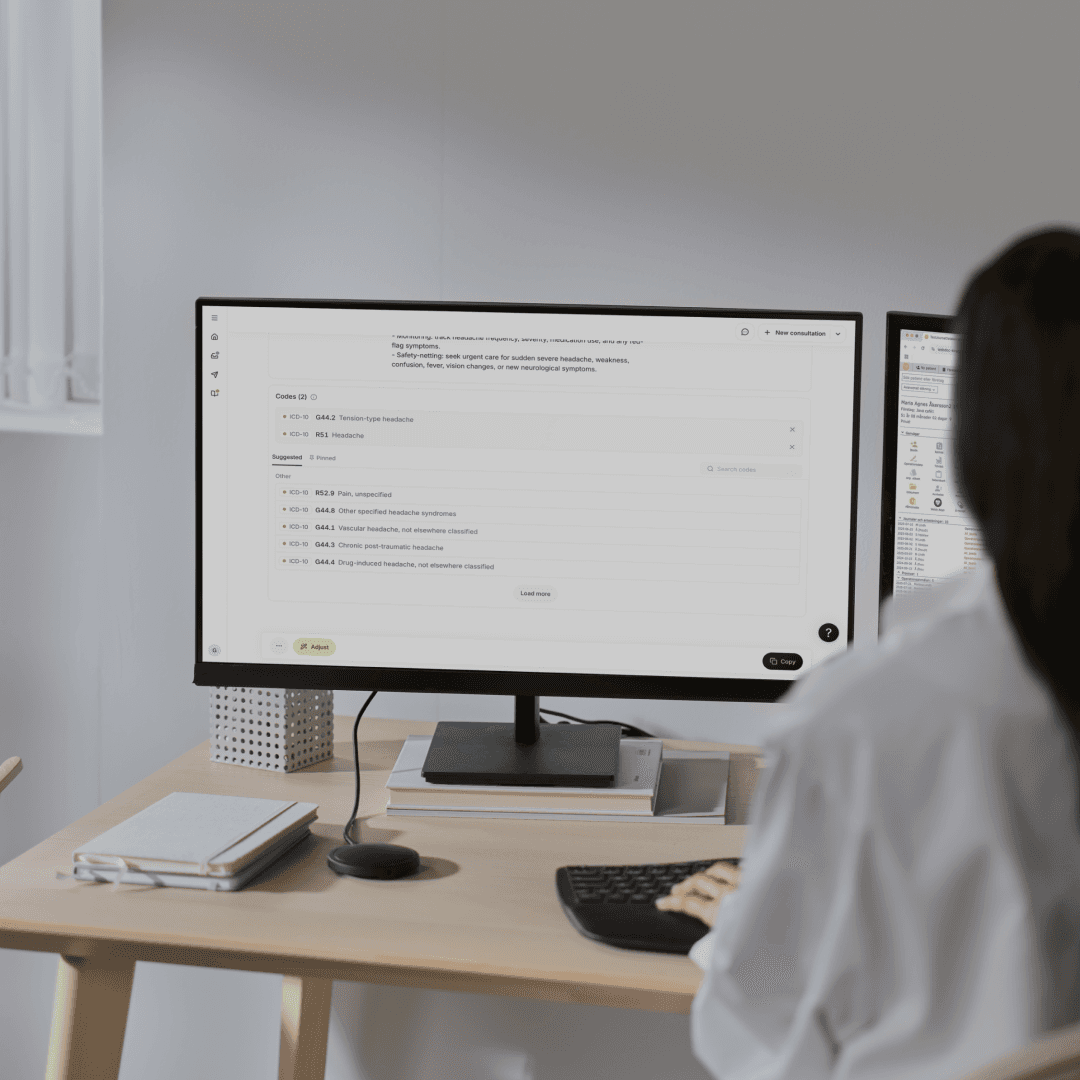
Début 2026, Aleris a activé l'Aide au codage de Tandem à Ultragyn. L'outil analyse la documentation clinique en temps réel et propose des codes de diagnostic et d'actes au fil de la rédaction du compte rendu. Le médecin examine chaque suggestion et la valide avant son enregistrement. Aucun code n'est enregistré sans la validation du médecin.
Le pilote a duré deux mois, de février à mars 2026. Les résultats ont été comparés à une période de référence allant d'octobre à novembre 2025 et qui reflétait la situation du codage avant l'introduction de Tandem.
Les médecins ont codé plus complètement, et les corrections ont cessé
Le résultat le plus net ressort de la comparaison des médecins avec eux-mêmes : les mêmes praticiens, prenant en charge les mêmes types de patients, ont codé différemment selon que Tandem était actif ou non. Avec Tandem, ils ont enregistré en moyenne 0,259 diagnostic et 0,232 code d'acte supplémentaires par consultation. Les deux résultats sont statistiquement significatifs (p<0,001). Le test apparié par médecin confirme également cette tendance : 75% des médecins ayant suffisamment de consultations sur les deux périodes se sont améliorés (p=0,047).
Il ne s'agit donc pas de médecins qui seraient simplement devenus meilleurs en codage avec le temps. Ce sont les mêmes praticiens, sur les mêmes types de consultations, qui codent plus complètement lorsque Tandem est là pour leur suggérer les codes pertinents. Car l'outil ne propose que des codes déjà étayés par la conversation ou le compte rendu.
Les consultations non codées ont disparu
Pour les médecins travaillant sans Tandem, 1,2 % des consultations étaient enregistrées sans aucun code. Pour les consultations utilisant l'Aide au codage, ce taux est tombé à zéro.
La contrôleuse de codage n'avait plus rien à corriger
Parmi les 841 consultations réalisées avec Tandem et ayant donné lieu à des suggestions validées, aucune n'a nécessité de modification de la part de la contrôleuse. À titre de comparaison, les consultations réalisées sans Tandem présentaient un taux de correction de 0,8%.
Un constat flagrant : sans l'outil, le codage régressait
Le constat le plus parlant concerne les médecins qui n'ont pas utilisé Tandem. Sur la même période et dans la même clinique, les deux groupes ont évolué en sens inverse :
Diagnostics par consultation : utilisateurs de Tandem +0,259 (p<0,001) ; consultations sans Tandem −0,082 (p<0,001)
Codes d'actes par consultation : utilisateurs de Tandem +0,232 (p<0,001) ; consultations sans Tandem −0,223 (p<0,001)
Une autre clinique d'Aleris, utilisant le même dossier patient informatisé et les mêmes règles de codage, mais sans l'Aide au codage, a enregistré la même baisse. Les gains observés à Ultragyn ne relevaient donc pas d'une tendance générale : ils étaient propres à l'utilisation de l'outil.
La confiance dans les suggestions a également progressé au fil du pilote. La part des consultations pour lesquelles un médecin validait au moins une suggestion de Tandem est passée d'environ 27 à 44% en début de période à 76 à 84% au cours des dernières semaines.
Pour Minna Westerberg Ekman, médecin en cours de spécialisation en gynécologie à Ultragyn Sabbatsberg, la différence a été immédiate :
« Avec le module de codage, j'ai eu pour la première fois le sentiment de gagner du temps sur le codage… Clic, clic, clic, et c'est fait. »
L'exhaustivité de la documentation ne repose plus sur une seule personne
Lorsqu'une consultation n'est pas codée, la clinique risque de ne percevoir aucun financement pour des soins pourtant réellement dispensés. De nombreuses cliniques spécialisées dépendent d'une seule personne, souvent une contrôleuse de codage, pour compléter la documentation a posteriori. Lorsque cette personne est absente, les lacunes restent ouvertes.
À Ultragyn, le pilote a montré ce qui change lorsque le soutien intervient au moment même de la documentation, plutôt qu'une semaine plus tard. Les consultations réalisées avec Tandem étaient complètes dès le départ. La revue hebdomadaire de correction, qui constituait jusque-là une étape incontournable du processus, n'était plus nécessaire pour ces consultations.
Cela ne rend pas l'expertise en codage superflue. Cela réduit la dépendance à un contrôle a posteriori et permet que l'exhaustivité de la documentation ne soit plus limitée par la capacité d'une seule personne.
À la suite du pilote, Aleris poursuit l'utilisation de l'Aide au codage de Tandem à Ultragyn, et des discussions sont en cours pour étendre son utilisation à d'autres cliniques.
Les meilleurs résultats : là où Tandem a été le plus utilisé
Le pilote a été court : deux mois d'accès complet aux fonctionnalités. Certaines capacités de codage, notamment les packs de codes spécifiques aux GHM (DRG), n'ont été activées qu'en cours de pilote. Leur plein effet n'est donc pas encore visible dans les données.
L'utilisation de l'outil a également varié d'un médecin à l'autre. Les utilisateurs les plus actifs ont atteint une couverture de 80 à 91% de leurs consultations, tandis que certains n'ont jamais utilisé l'outil. Le résultat par médecin est significatif, mais les gains de codage se concentrent chez les praticiens ayant utilisé Tandem de façon régulière. L'outil a principalement été utilisé pour les consultations ; la couverture des actes techniques était plus faible, ce que la clinique a identifié comme une piste d'amélioration pour la prochaine phase.
Découvrez ce que l'Aide au codage donnerait dans votre structure
Réservez une démo de 20 minutes avec notre équipe clinique et voyez comment Tandem s'articule avec votre dossier patient informatisé et vos processus.